Visitor offered Python training

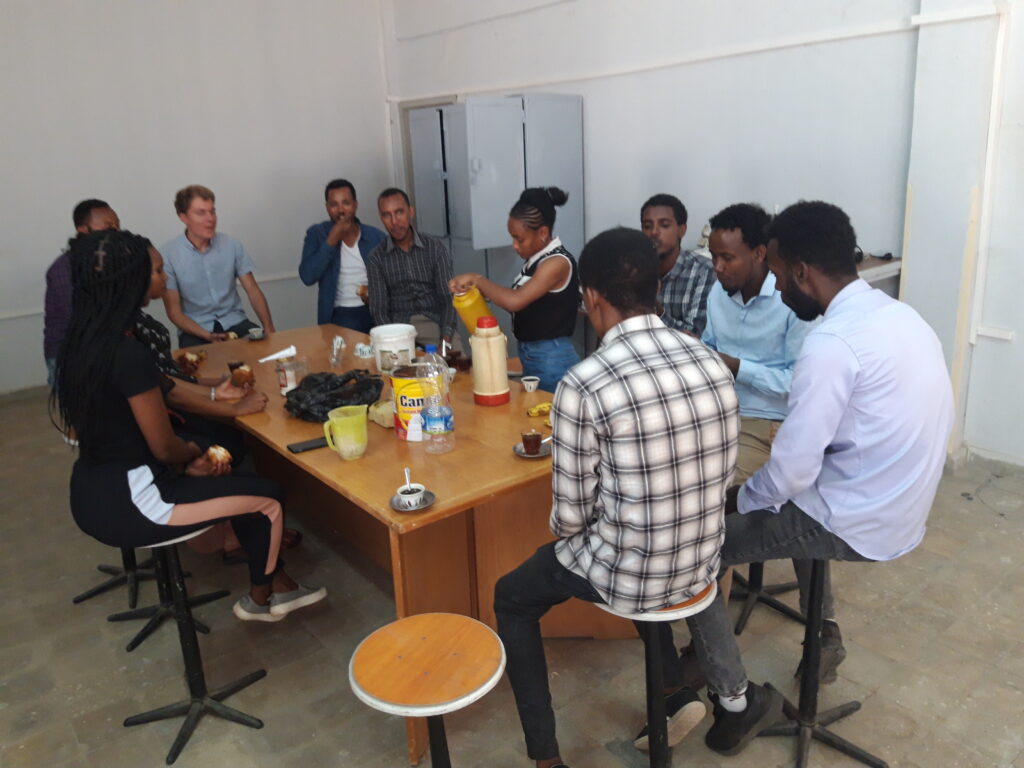
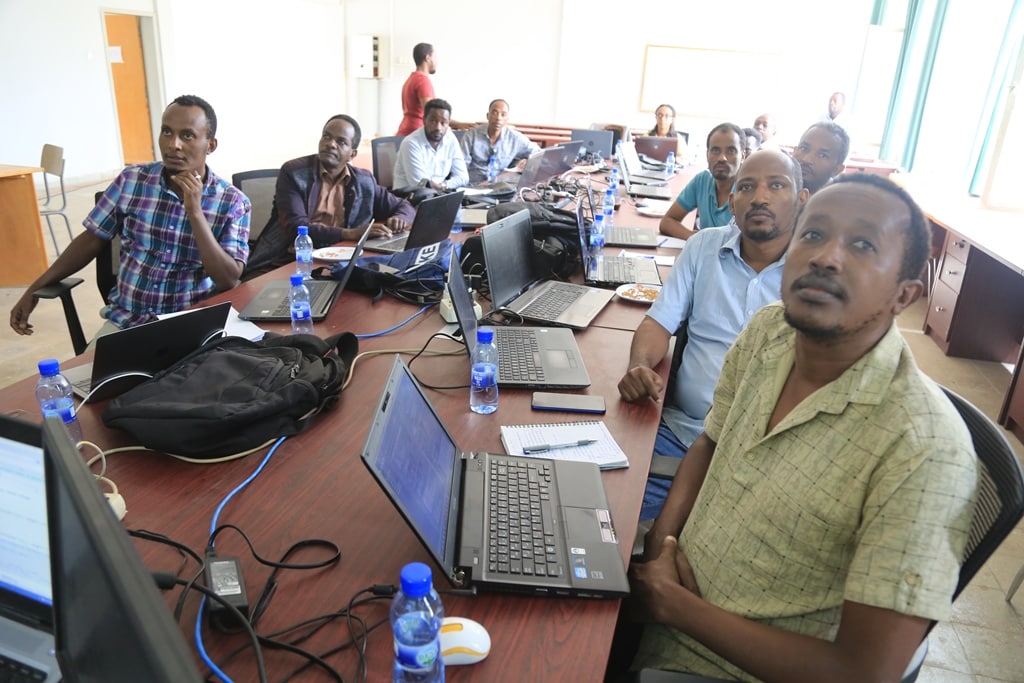
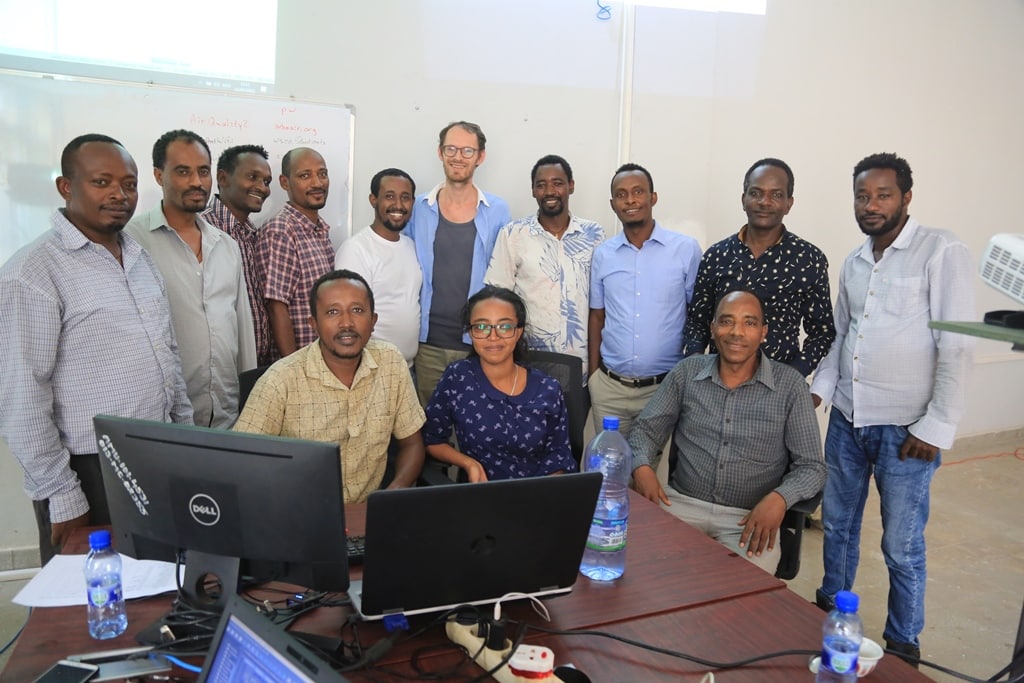
My brother in law, Nimrod de Wit, came to Arba Minch to live and work with us for some months. He has quite some experience with Python. Based on this experience, our visitor offered a training on Basic Python for Environmental Data Processing to my colleagues of the Arba Minch Water Technology Institute. 31 persons attended one or more training sessions. 17 persons received certificates for attending all sessions and submitting an assignment in which they used Python for their own data.
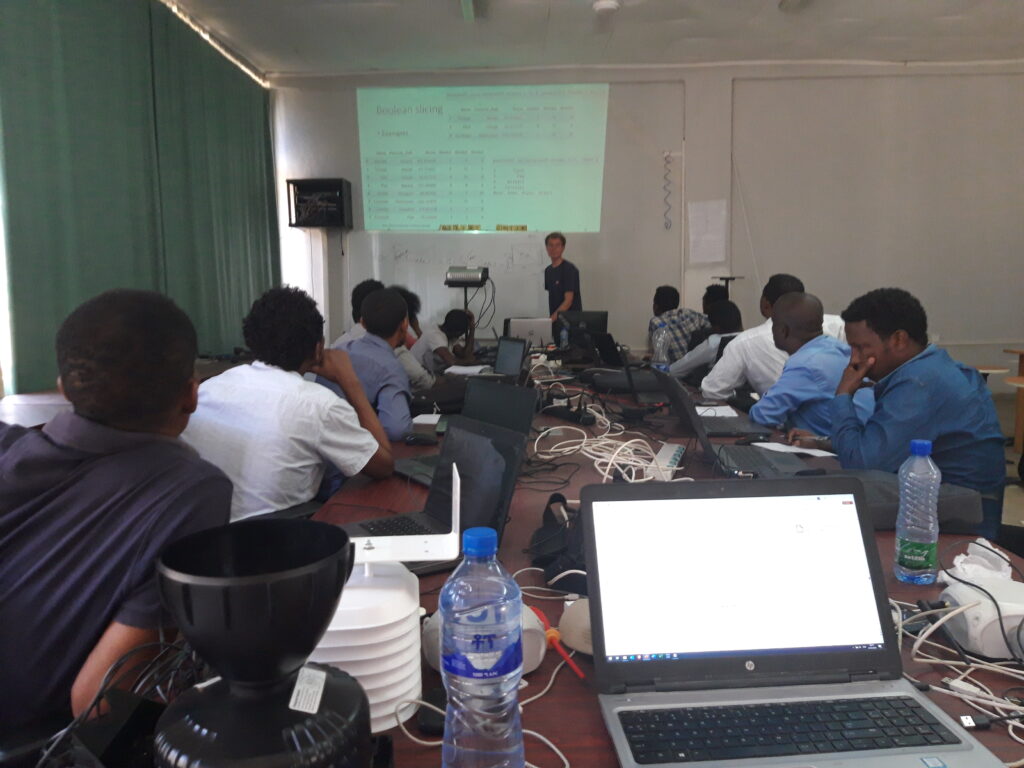
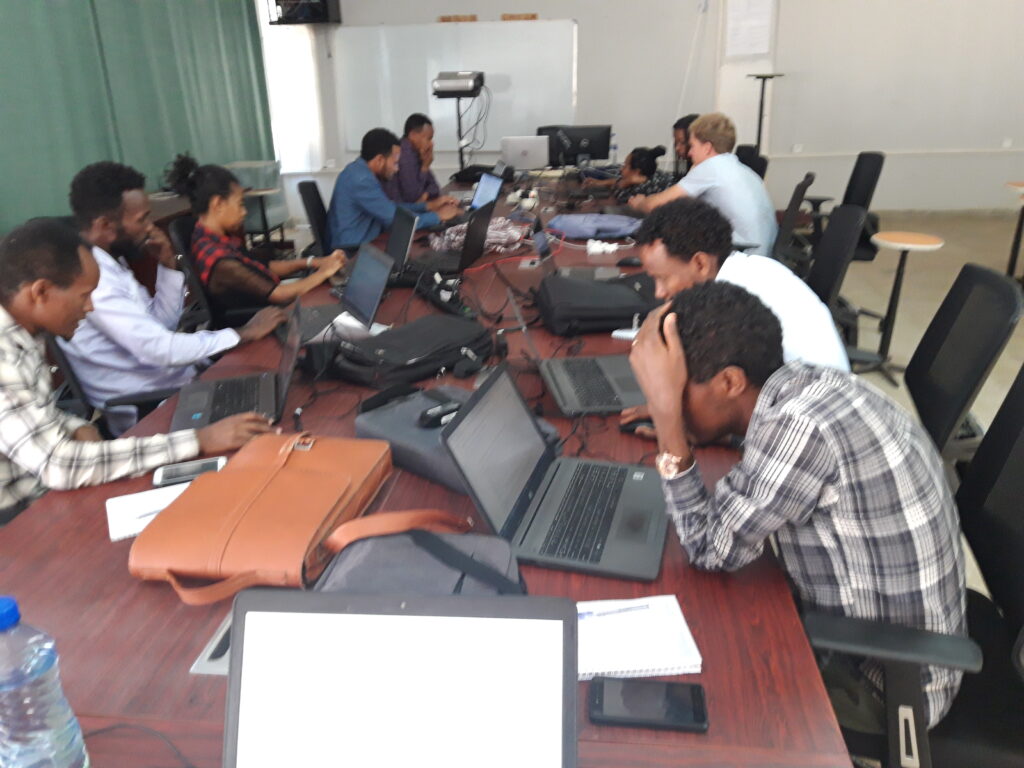
I have offered a Python training to AWTI staff already multiple times (march 2021, june 2021, october 2021 and october 2022). Nimrod fully revised those materials. My trainings leaned heavily on Powerpoint slides and simultaneous small practice tasks in the Spyder IDE. Nimrod shifted to small (30 minute) introductions, after which participants could work by themselves through Juypter Notebooks. The training materials are on my GitHub repository.

I was glad to be the assistant rather than the trainer during a training for once. I am very glad for the revised training materials, which force the participants to practice much more. A training might help people to get started, but skills in something like programming are ultimately from a lot of hours of simply trying and using it.
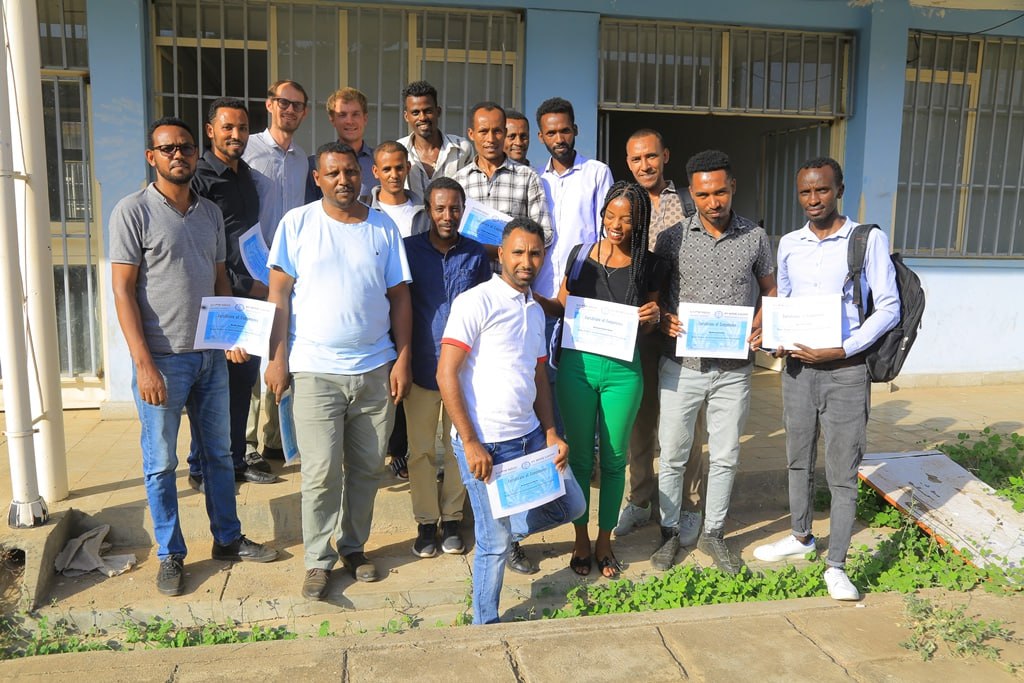
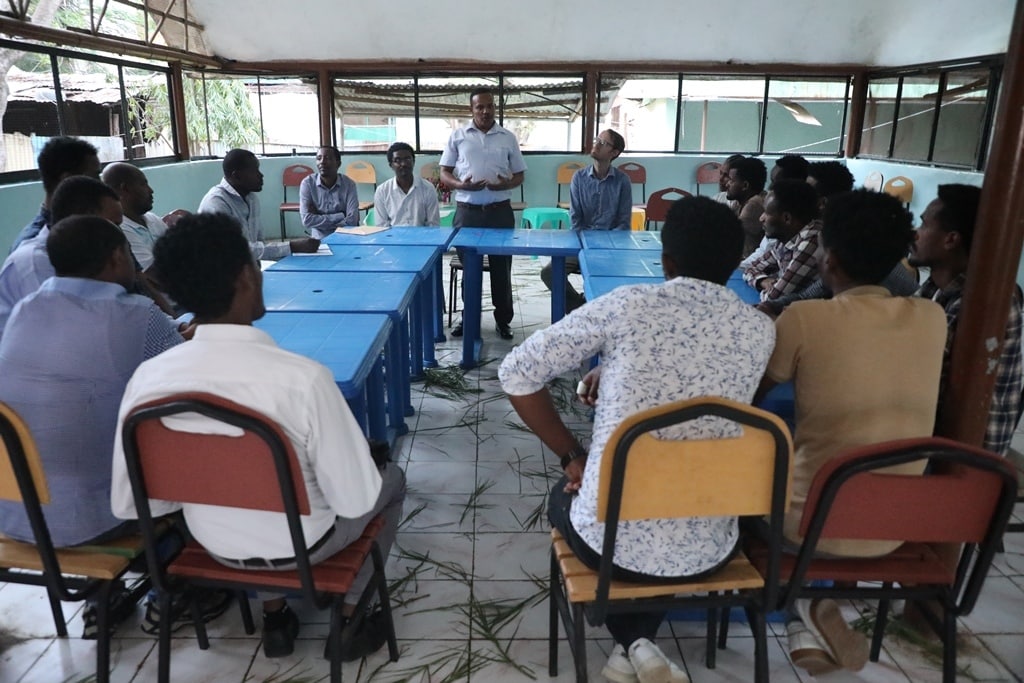
Training participants could only receive a certificate after completion of a personal assignment.

Python Training of Trainers

I offered a Training of Trainers on Basic Python for Environmental Data Processing. Participants were selected from the four faculties of the Arba Minch Water Technology Institute (AWTI), as well as the Water Resources Research Centre (WRRC). The intention was to create in each of these faculties a Python team of 2-3 staff members that can provide courses and support within their respective faculty. Eleven participants received their certificate during a closing ceremony. During that ceremony, each participant presented their plan for what they would do with Python for AWTI. Scientific directors of both AWTI and the Arba Minch Institute of Technology (AMIT) were present as well.

Closing ceremony of the Python Training of Trainers. The empty tables were later on filled with delicious goat meat and injerra.

I have offered a Python training for AWTI staff already three times (in March 2021, June 2021 and October 2021). Approximately 100 colleagues have come to one or more training sessions. The number of staff really taking up Python, however, is low. Our newest idea was therefore to offer a focused Training of Trainers (TOT). Participants were asked to provide a motivation at the start of the training, and write a plan on what they will do with Python for AWTI after the training. Also, the training materials were extended a bit, and spread out over more sessions. The earlier Python trainings took five days – or ten mornings. This TOT took ten full days. The increased time was filled with a bit of new material, but especially more time for practice.

I have shared the training materials on an OSF repository.

Article on evaluation of low-cost sensors

Across various locations I have used the IQAir Airvisual Pro (IQAV), the UCB-PATS+ (PATS), and the Sensirion SPS30 as part of a locally assembled sensor system (SPSA). I have analyzed the data of different locations where those low-cost sensors (LCS) were collocated. At some of those locations, I also conducted gravimetry measurements with the UPAS. Based on this, I conducted an evaluation of the low-cost sensors PM2.5 data quality in three ways:

  • Within identical sensors (how do identical sensors compare to each other);
  • With each other (how do the measurements of one LCS compare to another LCS);
  • With the reference method (gravimetry is the golden standard for PM2.5 measurements).

Results of this comparison now have been published: “Evaluation of Three Low-Cost Particulate Matter (PM2.5) Sensors for Ambient and High Exposure Conditions in Arba Minch, Ethiopia“. All data and code for data processing and visualization is hosted on an OSF repository.

One of the collocation measurements was in a kitchen on main campus.

Data quality

My primary interest is the data quality of the SPSA. The IQAV and PATS cost about 300-500 euros. We construct the SPSA locally, and it costs about 60 euros. I found out that both under ambient and indoor (high and highly variable concentrations) circumstances, the SPSA data quality is equal to if not better than that of the IQAV and the PATS. More importantly, based on the data collected so far, the SPSA data quality compares well to international data quality requirements. The coefficient of variation (a measure of variation between identical sensors) ranged between 3 and 7% across low and high concentrations. This is lower than the required 10%. The accuracy versus gravimetric samples (a measure of how much it is ‘off’) was 16% under ambient and 15% under indoor circumstances. This is lower than the required 25%.

I will continue collecting data with the SPSA. For example, the gravimetry comparison under ambient conditions was only based on three samples. However, so far it is very promising that with a locally assembled sensor system we can surpass data quality of commercially available instruments and reach international standards.

Concentration levels

The analysis included data from several measurements, across low (<10 μg/m3) to high (>10,000 μg/m3) concentrations. Below, concentrations of all LCS across various locations are shown (Figures A1 and A2 of the article).

FigureA1
FigureA2
previous arrow
next arrow

Students find priority areas: publication

The student course on air quality in 2019 resulted in concentration data of various places on the campus of Arba Minch University. Together with three top students of this cohort (Muse Abayneh, Kirubel Getachew and Feyera Fekadu) I wrote an article concerning priority areas that could be distinguished from the student measurements. This article has now been published in the Clean Air Journal: Using student science to identify research priority areas for air pollution in a university environment: an Ethiopian case study.

Student measurements at various locations, relative to the respective guideline value. At multiple locations measurements are above the guideline value (>100%).

Python training for Biology

On request of Dr. Ashenafi Hailu, I constructed and offered a training in Basic Python for Biology Data Processing. 12 PhD students participated in the training. Daniel Asele assisted me during the training. The training took five full days, all within one week.

For this training, I followed the general outline of the training I gave earlier for environmental data: module 1 and 2 as the absolute basics (variables, conditions, loops, etcetera), and modules 3 and 4 for working with data (Pandas) and visualizing data (Matplotlib). I based data examples on the field of biology. The fifth module went into some applications more specific to biology: some statistics, (sequence) string manipulation, and working with the package BioPython. I have shared all training materials on an OSF repository.

This training was a (probably one-time-only) move out of my normal field. It cost me quite some time to get acquainted with terminology and techniques for biology. This spent time directly translated itself into more experience. However, in the future I prefer to stick to tools and knowledge used in my own field (air quality). Or, that of my direct colleagues (Arba Minch Water Technology Institute; environmental sciences).

Apart from that, this training was an experiment with offering it within one week (five days in a row). For a next training, I will shift back to one or two sessions per week. Five days in a row made it impossible for participants to practice with module topics before moving on to a next module.

Python package development for meteorological data

The Ethiopian Meteorology Institute (EMI) collects meteorological data from several weather stations all over Ethiopia. Data is processed manually in Microsoft Excel. To validate this data, or to produce tables or graphs, employees spend much time. Zerihun Bikila, employee of EMI and a master student in one of my Python classes, came up with the idea to create automated data processing tools with Python, under the name ‘PyCAMT’ (Python based Climate Data Processing and Visualization). Based on this, we worked on the development of a python package for meteorological data in Ethiopia.

Sample use of the preliminary package: visualizing meteorological data with one line of code.

For a month, I have enthusiastically coded together a preliminary package for importing, processing and visualizing EMI station data. Zerihun worked on a user interface in Jupyter Notebook. We tried to pitch the package to EMI management, but this so far proved difficult. Anyways, it was good practice for me to create a package in Python, and I am sure that I will use what I learned in the near future to help people automize and professionalize data processing and visualization.

I hosted the Python code as pycamtET on my GitHub repository. The Jupyter Notebook interface is hosted as pycamtETinterface. Below, you can see slides that introduce the package.

Measurements in Addis Ababa

With help of Tofikk Redi (Ethiopian Meteorology Institute, EMI), I have installed three low-cost self-assembled low-cost sensors and one IQAir Airvisual Pro at the monitoring station of EMI in Addis Ababa. Tofikk will irregularly download and share the data, but I also want to find out how the set-up is working for a longer period without regular checkup. As for the data itself, I am interested in the intercorrelation as well as the correlation with the IQAir instrument under concentration levels in Addis Ababa. Also, I hope to compare data of my sensors with the Beta Attenuation Monitor (BAM) at this site. The BAM is a reference-grade PM monitor. The BAM at this site is currently not operational, but EMI expects it to be back in business within the coming months.

Installation of low-cost sensor systems at the EMI monitoring station in Addis Ababa.

EMI monitoring station in Addis Ababa

Kitchen validation measurements

With help of my colleague Dagmawi Matewos, I have installed two measurement boxes filled with instruments in the university campus kitchen. In my courses and research I use low-cost measurement instruments, for which the lower costs usually comes at a cost of quality.  Validation is therefore important. We installed the instruments in this kitchen to validate the instruments under high and variable concentration circumstances. In this kitchen, food is prepared for students at various fire pits.

The following instruments are installed across two boxes:

  • Four self-developed PM2.5 sensor systems (ASPM);
  • Six UCB-PATS+ PM2.5 sampling instruments;
  • Ten IQAir Airvisual Pro instruments (measuring PM2.5 and CO2);
  • Ten Lascar EL-USB_CO carbon monoxide sensors;
  • Three UPAS gravimetric PM2.5 sampling instruments.
Measurement box
Validation preparation
Instruments
Kitchen measurements
previous arrow
next arrow

All PM2.5 measurements will be compared with each other. The ASPM, PATS and IQAV measure continuously (at a frequency of <20 seconds). The UPAS instrument is used to collect filters for gravimetric analysis, and can be considered as golden standard for PM2.5 measurements. Hence, instruments can be evaluated based on intra-correlation (how well do they compare to their own type), inter-correlation amongst low-cost sensor types (comparing ASPM with PATS and IQAV, and vice versa), and correlation to the reference (UPAS).

For CO2 and CO I only have one instrument, so for those there is only intra-comparison possible. We have installed an additional six IQAV instruments in a student dormitory, to specifically test the instrument under varying CO2 concentrations.

Article on student science

Aquademia published our article titled An Evaluation of Best Practices in an Air Quality Student Science Project in Ethiopia.

The publication is based on my students’ data from October 2019 – January 2020. We evaluated this practical course’s educational and scientific outcomes to see if combining research and teaching is feasible in Ethiopia’s public university context. Spoiler: it is.

Figure 1 of the publication: comparison of student measurements with other studies, across various scenarios. Measurements by my students are in most cases comparable to other studies.

We speak about ‘student science’ to keep a strong link with ‘citizen science’ (science done by non-scientists), but to stress that it is with students. The benefit of this approach is that, contrary to other citizens, university students are supposed to learn about doing research. Therefore, involving students in conducting research has both benefits for the research field and for the students’ education. I am planning to keep applying this method, and I hope that others at Ethiopian universities will start applying it as well. In a country with both theoretical education and limited research resources, student science is a win-win.

First use of donated laptops

The first 15 GMB laptops arrived in Ethiopia by mail. While already promised in March and transported in May, finally they are in the lab, and students can start to use them!

Donated laptops ready in the air quality lab


The laptops were sent by post, but once arrived in Ethiopia, it was quite a challenge to get them to Arba Minch. While the resale value per laptop was 150 euro, the laptops were taxed as new. Furthermore, initially a penalty of 300% was awarded because it was seen as importing laptops without license. After multiple visits to Addis Ababa and a lot of paperwork, the penalty was waived and the laptops were forwarded to Arba Minch. The remaining tax will be refunded by Arba Minch University. Thanks to them and thanks to GMB my students can now get practical computer classes which are not affected by power outages and absent lab assistants!

GMB promised to donate in total 30 laptops. Based on the experience with the first batch, the next batch of 15 laptops will be transported by people visiting us from The Netherlands.